

BY ALEXANDER PRACHT CIVILNET
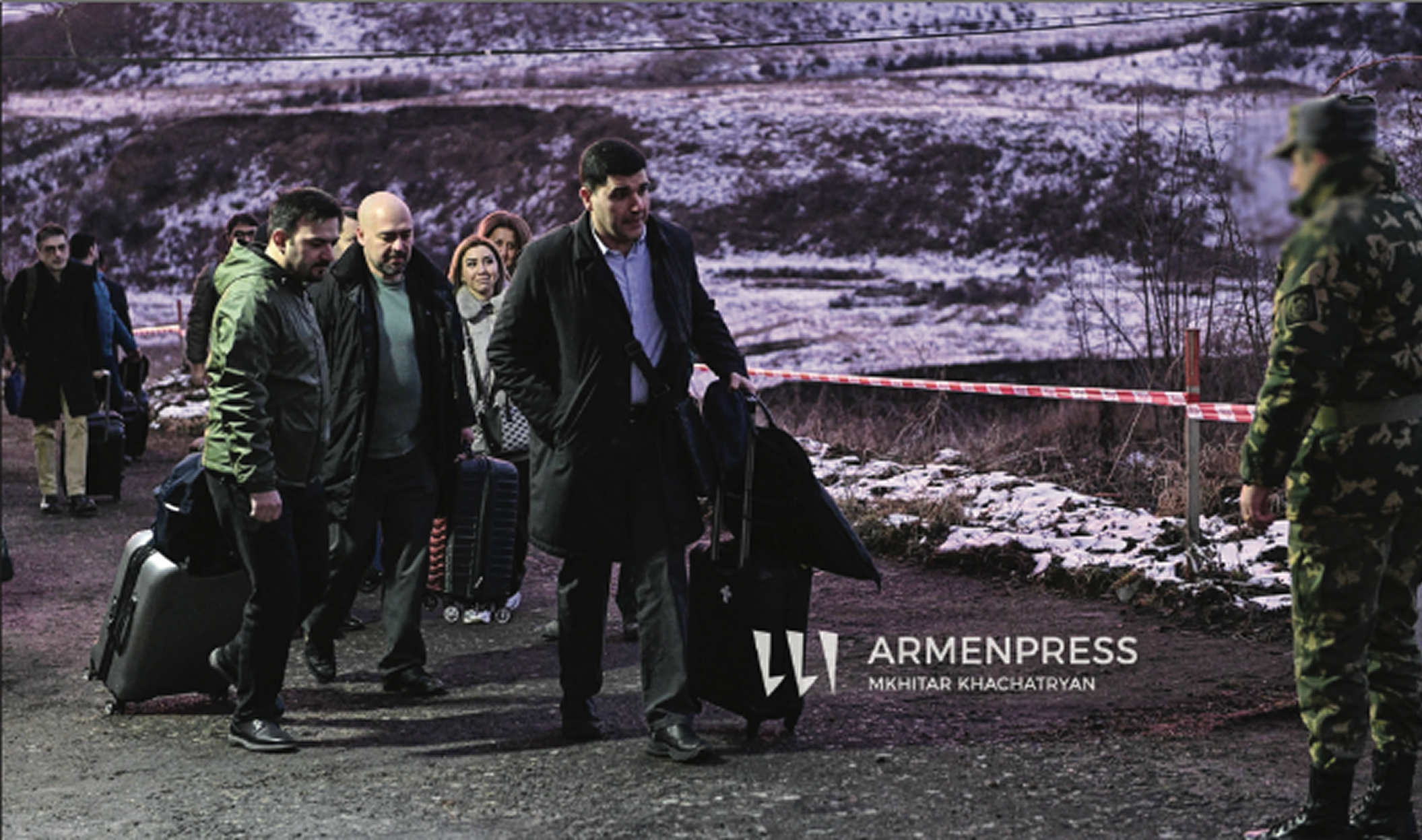
A group of 19 Azerbaijani journalists and experts, whom Baku describes as civil society figures, arrived in Arme- nia on Friday for a series of roundtable discussions with Armenian intellectu- als, NGO members and journalists. The event, titled Bridge for Peace, is a confidence-building initiative in the Armenian-Azeri normalization pro- cess. The visit expands on a smaller event in October, when five Azeri ex- perts also traveled to Armenia for simi- lar discussions. Notably, this time the Azerbaijanis arrived in Armenia not by plane, as they did in October, but by land through the only small section of the shared border that was demarcated in 2024. During the discussions, represen- tatives of Armenian and Azerbaijani civil societies will address the peace agenda established at the Washington Summit last August. Separate sessions will focus on the regional security ar- chitecture, the benefits of peace, public perceptions on the relations between the two nations, prospects for econom- ic cooperation, as well as the role of civil society in strengthening mutual understanding and trust. The visits are widely seen as more symbolic rather than practical, given that in the absence of diplomatic repre- sentation some contacts need to be es- tablished and dialogue should remain ongoing. On Armenia’s part, the coun- try’s National Security Service chief Andranik Simonyan and several staff members traveled to Baku in Septem- ber to participate in a regional security forum. The events have drawn criticism from some Armenian political com- mentators and members of the NGO community, who argue that Azerbai- jan’s so-called civil society is not gen- uinely independent, as such a space does not exist in Baku’s authoritarian regime, but instead consists of figures aligned with the government’s propa- ganda machine and reporting to Azer- baijan’s authorities.