
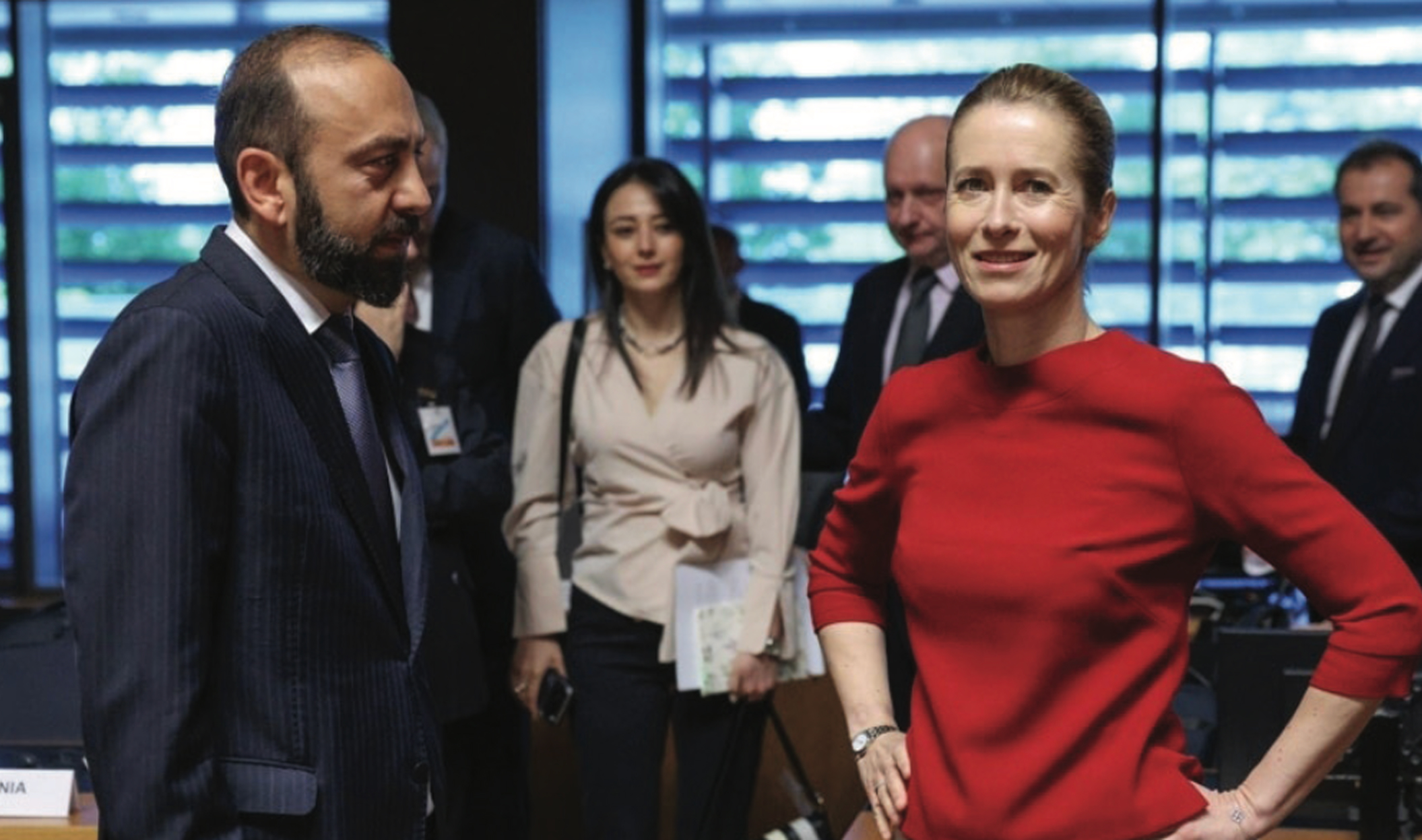

Armenia has urged the European Union to speed up its aid measures designed to help the country mitigate potentially severe consequences of a Russian embargo on key Armenian im- ports, according to diplomatic sources in Brussels. One of the sources told RFE/RL’s Armenian Service that Foreign Min- ister conveyed this message to his EU counterparts and EU foreign policy chief Kaja Kallas during a meeting in Luxembourg on Monday. The source described the meeting as “positive and important.” Kallas said that the top European diplomats discussed with Mirzoyan “how we can further strengthen Arme- nia’s resilience and economic diversi- fication.” “The EU is already working on a major economic support package to help Armenia withstand Russia’s un- fair trading restrictions,” she told re- porters. Kallas and some EU foreign min- isters welcomed the official results of Armenia’s June 7 parliamentary elec- tions that gave victory to Prime Min- ister Nikol Pashinian’s Civil Contract party. In the run-up to the elections, Rus- sian authorities imposed de facto bans on the vast majority of Armenian-made products exported to Russia, the South Caucasus nation’s main trading part- ner. Moscow also pressed Pashinian’s government to swiftly choose between seeking to join the EU or remaining part of the Eurasian Economic Union (EEU), a Russian-led economic bloc. The EU condemned the Russian embargo, saying that Moscow is “wea- ponizing economic relations for po- litical pressure” on Armenia. European Commission President Ursula von der Leyen also announced on June 4 50 million euros ($58 million) in urgent economic assistance to Yerevan. She said the EU will also open its market to “some Armenian products, in par- ticular agri-food.” The EU released the first 34 mil- lion-euro instalment of that aid on Friday. It said its Commissioner for Enlargement Marta Kos will visit Ar- menia on July 5 to “advance the imple- mentation of the support package and discuss further steps to strengthen EU- Armenia cooperation.” For its part, the Armenian gov- ernment has approved subsidies for domestic farmers, agribusiness firms and beverage producers that will find new exports markets. Pashinian said on Thursday that some of them are al- ready signing “big and long-term” sup- ply contracts with European partners. But he did not give any numbers. According to Russian officials, Armenian agricultural exports to Rus- sia totaled over $700 million last year. Armenian analysts are skeptical about Yerevan’s ability to quickly offset the potential loss of such export revenue. Pashinian and his political allies assured Armenians during the election campaign that Moscow will lift the trade restrictions if they win reelec- tion. Russia’s state agricultural watch- dog on the contrary banned more food imports from Armenia on June 11. Also, Russian leaders have ques- tioned the legitimacy of Pashinian’s election victory rejected by the Ar- menian opposition as fraudulent. President Vladimir Putin has still not congratulated Pashinian. On June 10, Russian Foreign Minister Sergei Lav- rov echoed Putin’s earlier demand for the Armenian government to make a choice between the EU and the EEU “as soon as possible.” Mirzoyan’s June 15 trip to Brussels underlined Yerevan’s intention to con- tinue moving closer to the EU “Mirzoyan’s visit confirmed the deepening relations between the EU and Armenia,” another European dip- lomat told RFE/RL. “Foreign Minister Mirzoyan also emphasized Armenia’s desire to diversify the energy sector and stressed the need for the EU to take steps in that direction.” Armenia imports from Russia the bulk of natural gas used by its house- holds, power plants and manufactur- ers. Moscow threatened late last month to end a significant discount on the price of Russian gas.
EU foreign policy chief Kaja Kallas and Armenian Foreign Minister Ararat Mirzoyan talk
at a meeting in Luxembourg, June 15, 2026.